Beta+|Exhibition Introduction
Against the backdrop of rapidly developing digital technology and new media and the ever-expanding boundaries of contemporary art, Beta+ is an exhibition that explores issues of transience and validity in our quest for information and novelty. Influenced by contemporary visual culture, people are constantly seeking visual stimulation from new technologies and craving new experiences; however, such consumer content often comes in fragmented forms, leaving us eagerly awaiting the next wave of emerging products, such as the next eye-catching article, the next unique scene, or the launch of the next generation of new digital goods. Real-time has become the core principle of our content consumption model, and capturing the latest trend has become the primary motivation for consumption.
The competitiveness of today’s large corporations lies in the accrual of knowledge and information and also the ability to quickly and efficiently update and integrate new functionality. This ability enables companies to adapt quickly to market changes and remain competitive. Even though the apps and tools we use today are relatively well-tested, they can still soon become outdated; in fact, the rate at which technology is being iterated and updated is accelerating. In a world where media, technologies, and materials are constantly being updated, artists have begun to rethink the different aspects of their creative production practices, exhibition methods, and forms of expression to adapt to a society with ever-accelerating changes. Therefore, this exhibition seeks to explore how these updates, rearrangements, additions and deletions, exchanges between developers and users, and the evolutionary phenomena are manifested in art.
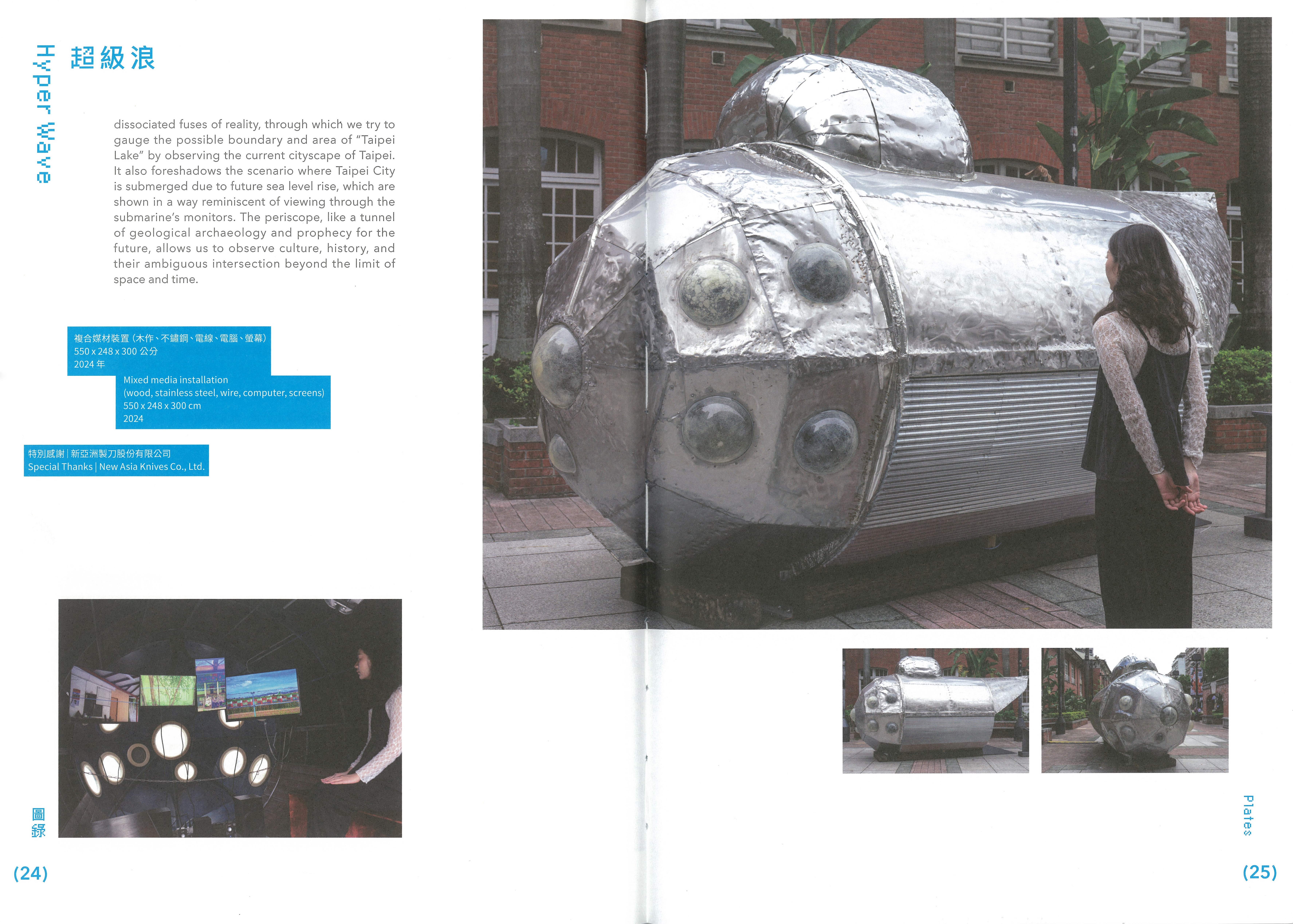
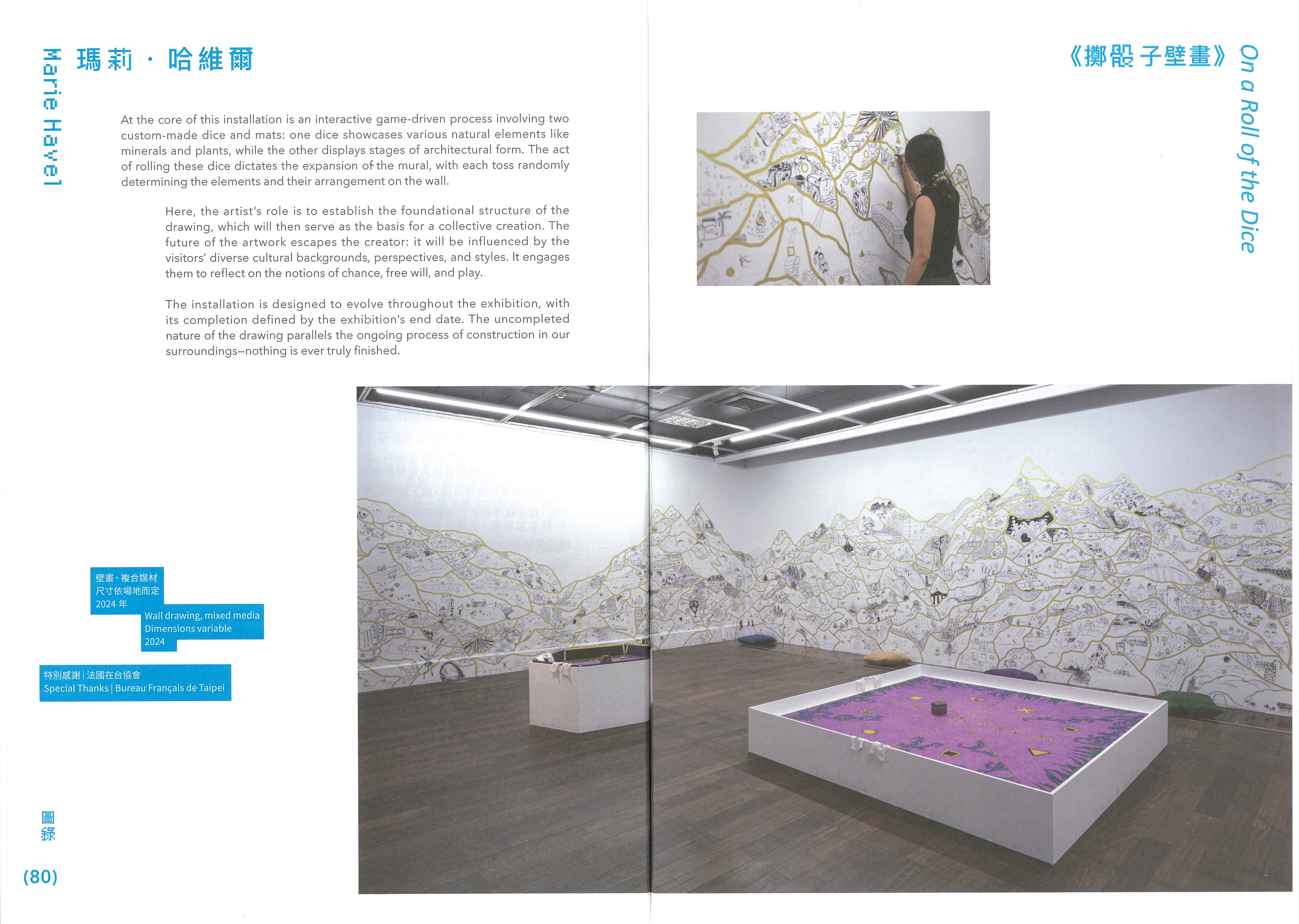
The exhibition brings together nine artists/groups from Mongolia, France, Singapore, and Taiwan. They respond to and present multiple facets and challenges related to contemporary spaces, environments, and visual cultures by exploring dynamic and real-time spatial experiences. Not a static exhibition, Beta+ presents the artists’ “real-time” creative processes, with their works constantly constructed and reassembled in the exhibition space, providing the audience with a unique and transient diachronic experience.
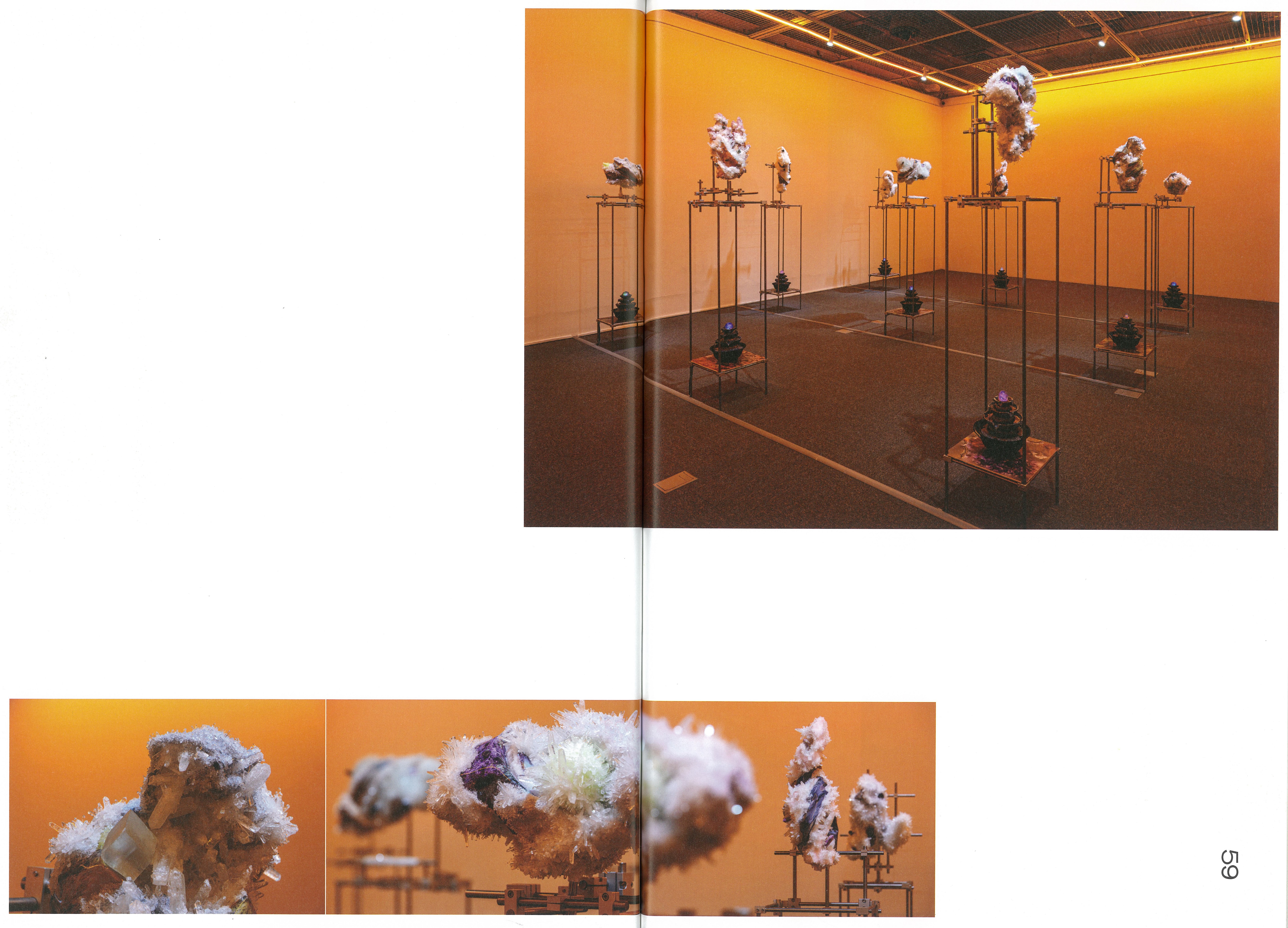
The artworks in the exhibition showcase a variety of transformative approaches, including digital and algorithmic, chemical and material, performative and situational. Viewers are invited to actively participate in this evolving exhibition, interact with the artists and their works, and reflect on the impermanence of fixed forms and the transience of information. Beta+ reflects the artists’ keen observations on our current environment and proposes a profound reflection on what the future may hold.
Image Fever|Exhibition Introduction
Before the digital age, French philosopher Jacques Derrida used “Archive Fever” (Mal d’archive) to describe the human drive toward oblivion. He argued that human beings have a strong desire for collecting, preserving, and archiving information and memory. The term “fever,” in this case, suggests a somewhat compulsive and anxious archiving behavior resulting from the fear of forgetting, the longing for connecting with memory, and the struggle between the two—this struggle involves an intricate relationship between interwoven desires, anxieties, power, and technology. However, in unforeseeable ways, the struggle and plundering between oblivion and memory continue to exist through information and data technologies, such as social media, cloud databases, big data, and algorithms. According to the statistics provided by data service companies, including Statista, Hootsuite, and Findstack, nearly 400 million images are uploaded daily to Facebook, Instagram, and other social media platforms. The ever-growing data-driven technologies have repeatedly and strongly demonstrated that the image era has now reached an unprecedented fervent state.
The question of “What is real?” seems irrelevant today. Instead, we should focus on what has been produced by the information deluge that makes it almost impossible to distinguish truth from lies. Modern technology has gradually transformed human beings into technology-driven visual machines. Images have replaced human memories and become ubiquitous in every aspect of everyday life, permeating the interstices of reality. Art historian Johnathan Crary critiques the notion of progress associated with images, questioning their ability to offer satisfaction. He believes that images have not merely destroyed information barriers, controlled our sleep hours and our time to wake up, and invaded the publicness of space and our privacy, but havealso reduced people’s concentration, leading to an inability to concentrate and think. The asymmetrical relationship between image and people exists like a spectre. [1] Instead of remembering things naturally, people have come to increasingly rely on using images and algorithms to document and manage every detail in life. Thus, we are seeing information overload and excessive archiving on mobile devices and social media; we are also witnessing memes being used for sarcasm and black humor, reflecting trending social phenomena and political events. Additionally, the consumption of internet information as something that is time-sensitive has not only made images a mainstream mode of communication but has also introduced the possibility of bridging the gap between perception and reality. In today’s world, with memory losing its grasp, the dream bird of human beings remains unrealized.[2]
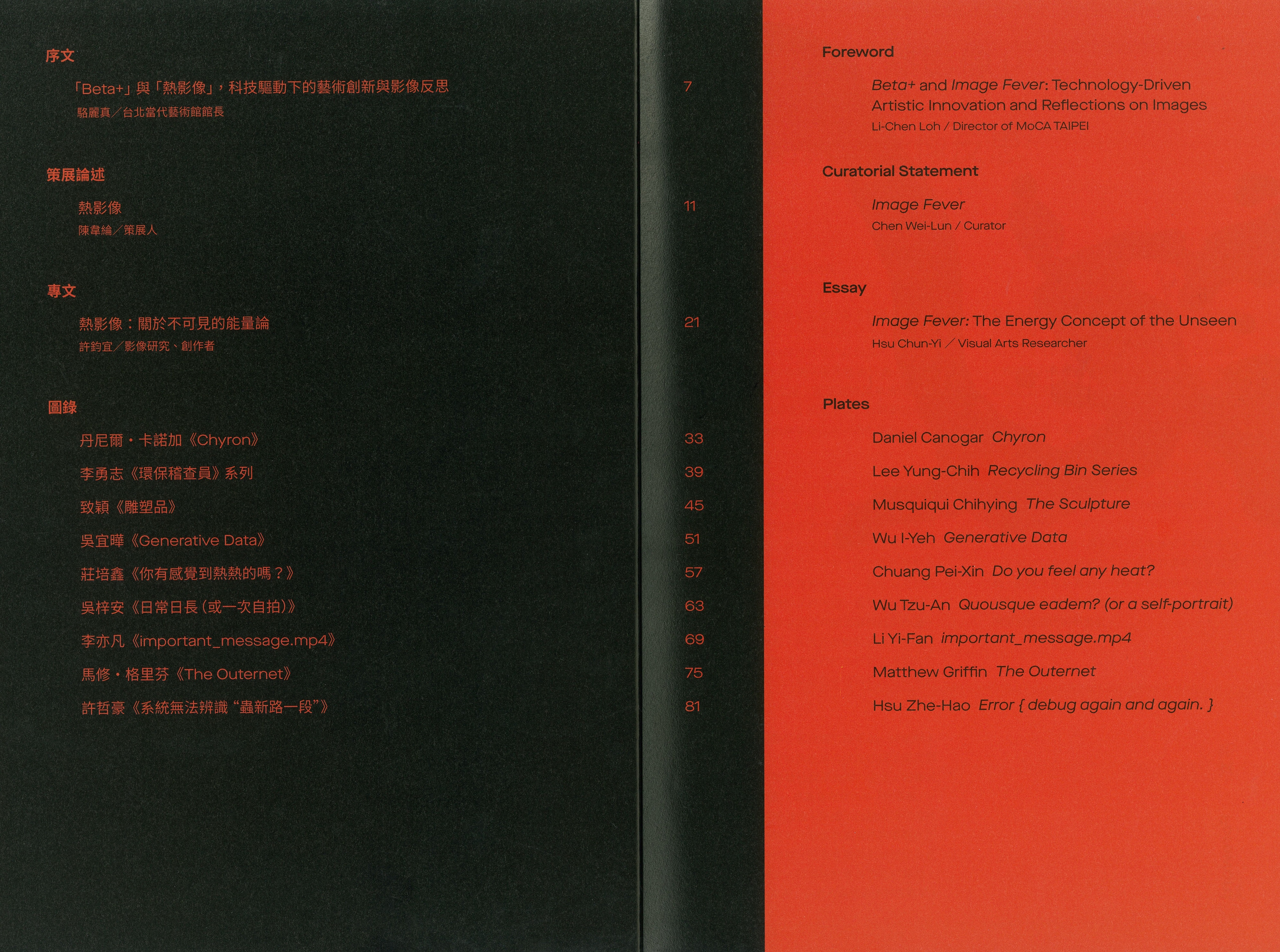
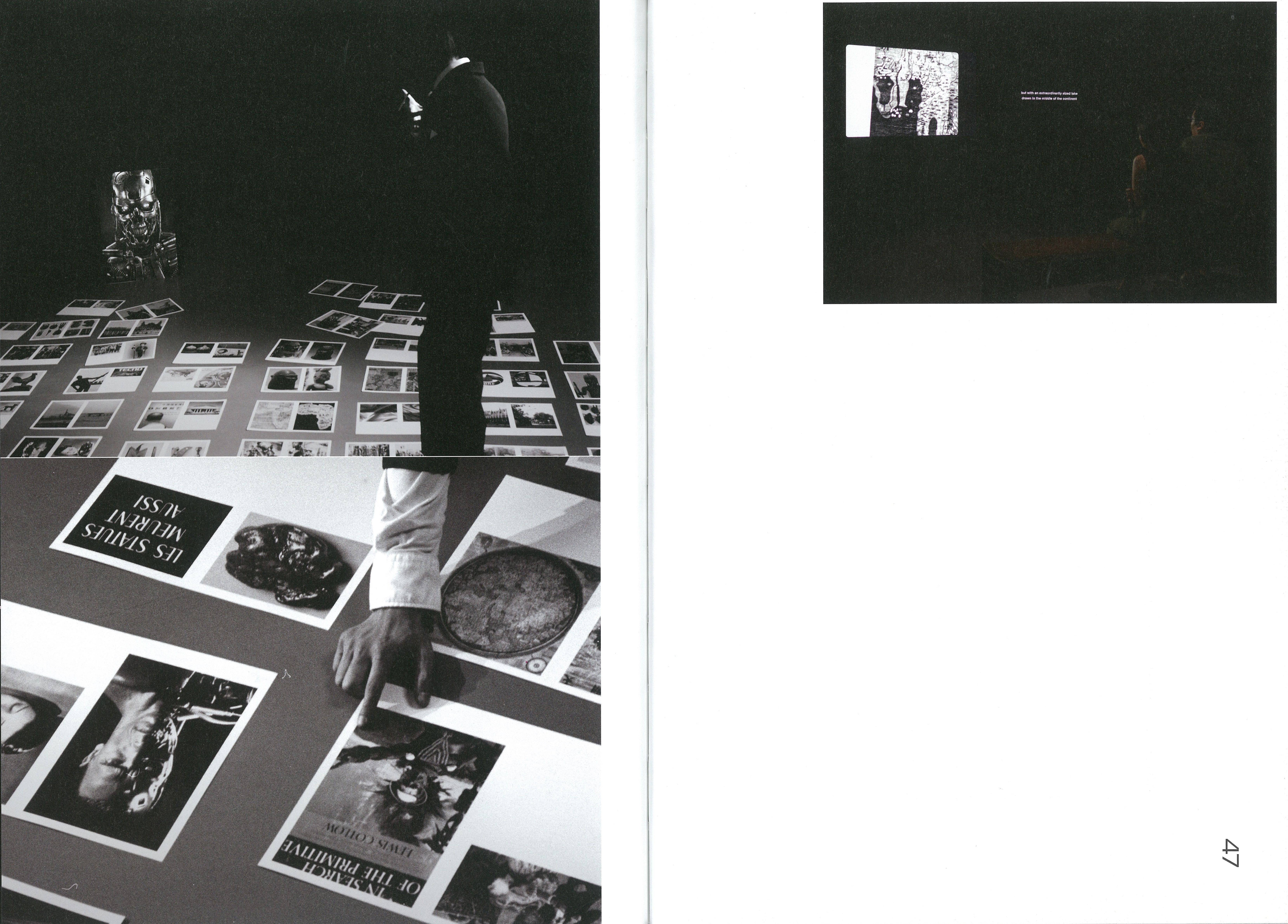
Image Fever is developed based on the idea of using the internet as a framework for comprehending image, video, and film works. This exhibition features nine artists, including Daniel Canogar, Wu I-Yeh, Wu Tzu-An, Li Yi-Fan, Lee Yung-Chih, Musquiqui Chihying, Matthew Griffin, Chuang Pei-Xin, and Hsu Zhe-Hao. Their works respectively explore the meaning of image conversion between information and images, material and virtuality, fiction and reality in relation to various topics, including individual and collective memory, identity, internet culture, geopolitics, and digital capitalism. It aims to reveal how modern technology shapes human desires and the alienation of human perception resulting from the technologies of image governance.
[1] In a lecture, Derrida mentioned French actress Pascale Ogier, who starred alongside him in Ghost Dance. In one of the scenes, they were discussing the question of ghosts in an office. When Ogier’s face came onto the screen, staring at him and asking him questions after she had passed away, an asymmetrical gaze emerged as Derrida could no longer look her in the eyes. Derrida used the term “spectre” to describe this subject in the visible yet invisible images. Derrida, Jacques, and Bernard Stiegler (eds.; 2002). “Echographies of television.” Echographies of Television: Filmed Interviews. Cambridge: Polity Press. pp. 29-144, pp. 120-121.
[2] In “The Storyteller,” Benjamin states that storytelling is the art of converting experiences into others’ memories. The process requires a state of relaxation like sleep, calling this the dream bird that hatches the eggs of experience. However, storytelling has gradually disappeared in modern society due to writing and mass media. The fragmentation of experience also leads to the decreasing exchange of experience. Benjamin, Walter. Illuminations: Essays and Reflections. Trans. Zhang Xudong and Wang Ban. Hong Kong: Oxford UP. pp. 126-127.